
Use this guide only when the property is safe to enter. Follow emergency-authority instructions first.
Follow fire-department instructions
Do not re-enter until authorities say the property is safe. Conditions can change after the visible fire is extinguished, and damaged structural or electrical components may remain hazardous.
Secure the property
Openings may require emergency board-up, temporary fencing, roof protection, or controlled access. Protect the property without disturbing conditions more than necessary.
Expect water damage too
Firefighting efforts can introduce significant water throughout the structure. Extraction, contamination assessment, and structural drying may be required alongside fire and smoke work.
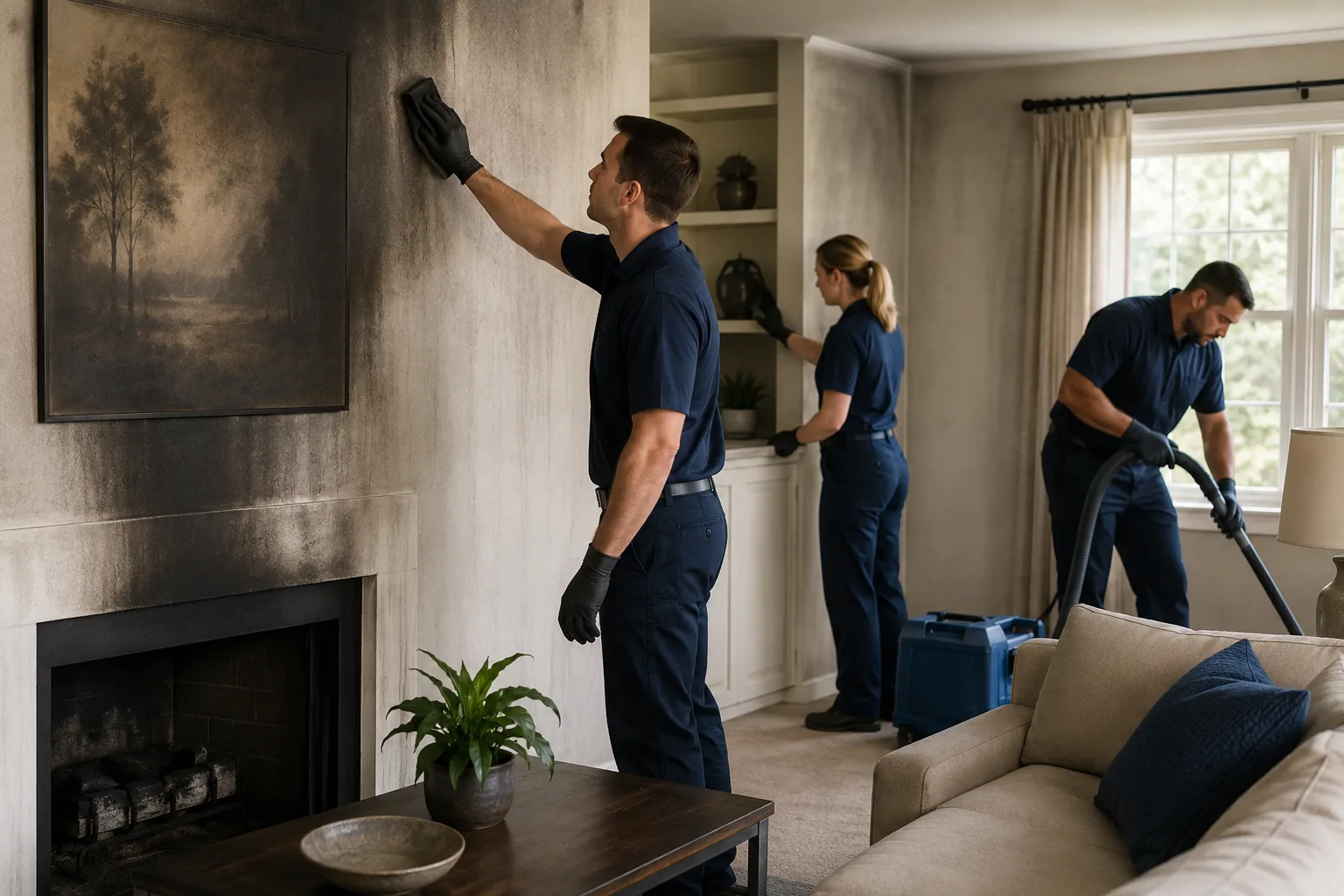
Do not wipe soot casually
Improper cleaning can smear residues, drive soot deeper into porous materials, and permanently damage finishes. Different residues and materials require different cleaning methods.
Document rooms and contents
Photograph visible damage and build a room-by-room contents record. Avoid discarding items until they are documented and evaluated, unless authorities require immediate disposal for safety.
Build one recovery plan
Coordinate structure, smoke and odor, water, contents, environmental conditions, emergency protection, and reconstruction so one phase does not undermine another.