
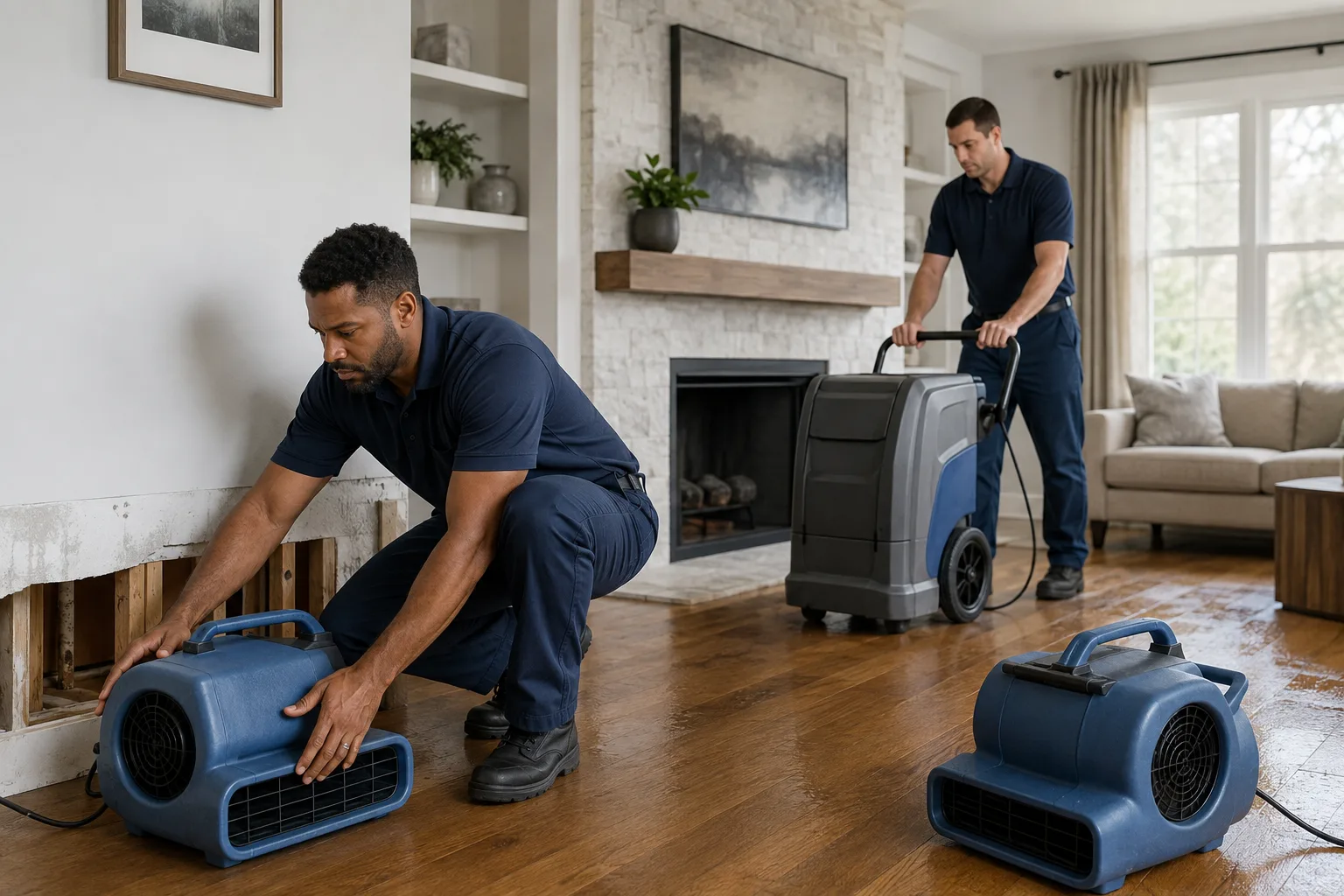
Use this guide only when the property is safe to enter. Follow emergency-authority instructions first.
Protect people first
Avoid standing water near electrical sources, contaminated water, sagging ceilings, unstable materials, and other unsafe areas. Leave the property and contact emergency authorities when conditions may be hazardous.
Stop the source only when safe
Shut off the water or affected appliance only if you can do so safely. Do not enter unsafe areas or manipulate electrical equipment while wet conditions are present.
Document visible conditions
Photograph the source, affected rooms, water lines, finishes, contents, and visible migration before moving or removing items. Do not delay emergency action merely to take photographs.
Avoid spreading contamination
Do not move through sewage or contaminated water unnecessarily. Keep people and pets away, and avoid using household fans that may spread aerosols or contamination.
Call qualified restoration help
Water can move below flooring, behind walls, into cabinets, insulation, and structural cavities. Extraction, moisture mapping, contamination assessment, and controlled drying should begin promptly.
Keep the project record
Preserve photographs, receipts, emergency contacts, work authorizations, measurements, equipment records, inventories, estimates, invoices, and important communications.