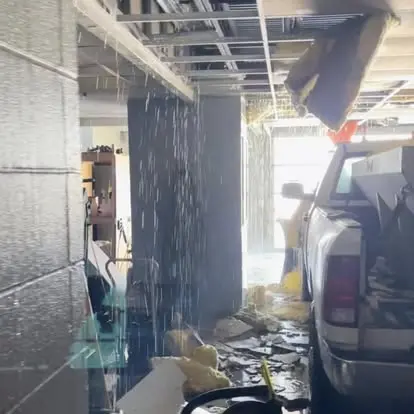
Flooded Basement: Where Water Hides After the Floor Looks Clear
How basement water can remain behind finished walls, beneath flooring, inside insulation, around contents, and within structural assemblies after surface extraction.
7 minute read · Guardian Restoration field guidance
01
The source changes the response
Groundwater, sewage, a sump failure, plumbing water, and storm entry do not present the same contamination or material decisions. Identify the likely source without entering unsafe conditions.
02
Finished basements conceal migration
Base trim, drywall, insulation, wall cavities, flooring systems, stairs, cabinets, and stored contents can retain water after the visible floor is cleared.
03
Humidity spreads the burden
Evaporation can raise humidity and affect materials beyond the original water line. Drying strategy should control both liquid water and moisture in the air.
04
The record should follow the recovery
Preserve source information, water lines, room-by-room conditions, readings, equipment, removals, contents decisions, and completion conditions.
Questions property owners ask
Make the next decision with context.
Is a basement dry when the concrete looks dry?
Not necessarily. Surface appearance does not confirm the condition of concrete, flooring, walls, insulation, framing, or contents.
Should drywall always be cut after a basement flood?
The decision depends on contamination, duration, material construction, migration, access, and whether cleaning and drying can be verified.
Can Guardian handle contents and rebuilding too?
Yes. Guardian can coordinate water mitigation, contents, documentation, and reconstruction under one recovery plan.
Related Guardian capability
Water damage restoration
See the field conditions, response sequence, credentials, and homeowner questions specific to this discipline.