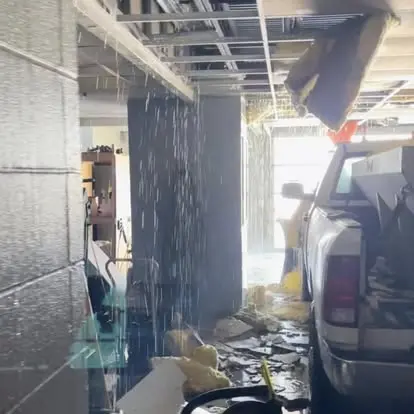
Why a small visible leak can affect flooring, wall cavities, insulation, cabinets, contents, and rooms away from the source.
7 minute read · Guardian Restoration field guidance
01
The visible water is only the beginning
Water follows gravity, capillary pathways, fasteners, seams, framing, flooring transitions, and penetrations. A ceiling stain may appear far from the entry point, while water below a finished floor may not be visible at all.
02
Materials respond differently
Drywall, insulation, wood, concrete, resilient flooring, carpet systems, cabinetry, and contents absorb and release moisture differently. Surface appearance alone cannot establish whether an assembly is dry.
03
Why moisture mapping matters
A useful assessment compares affected and unaffected materials, traces migration, records measurements, and updates the drying plan as conditions change. The goal is not to create impressive numbers; it is to understand where water moved and whether the strategy is working.
04
What property owners should preserve
Keep photographs of the source and migration, dates, readings, equipment records, removal decisions, contents information, and completion conditions. Those records support continuity when the project moves from mitigation into repairs.
Questions property owners ask
Make the next decision with context.
Can drywall look dry while remaining wet?
Yes. Paint and surface airflow can change how a wall looks while moisture remains within gypsum, insulation, framing, or an adjacent assembly.
Does every wet material require removal?
No. The water category, material characteristics, duration, access, contamination, and ability to verify drying all influence the decision.
When should professional drying begin?
As soon as the property is safe and the source is controlled. Delays can increase migration, material damage, and microbial risk.
Related Guardian capability
Water damage restoration
See the field conditions, response sequence, credentials, and homeowner questions specific to this discipline.