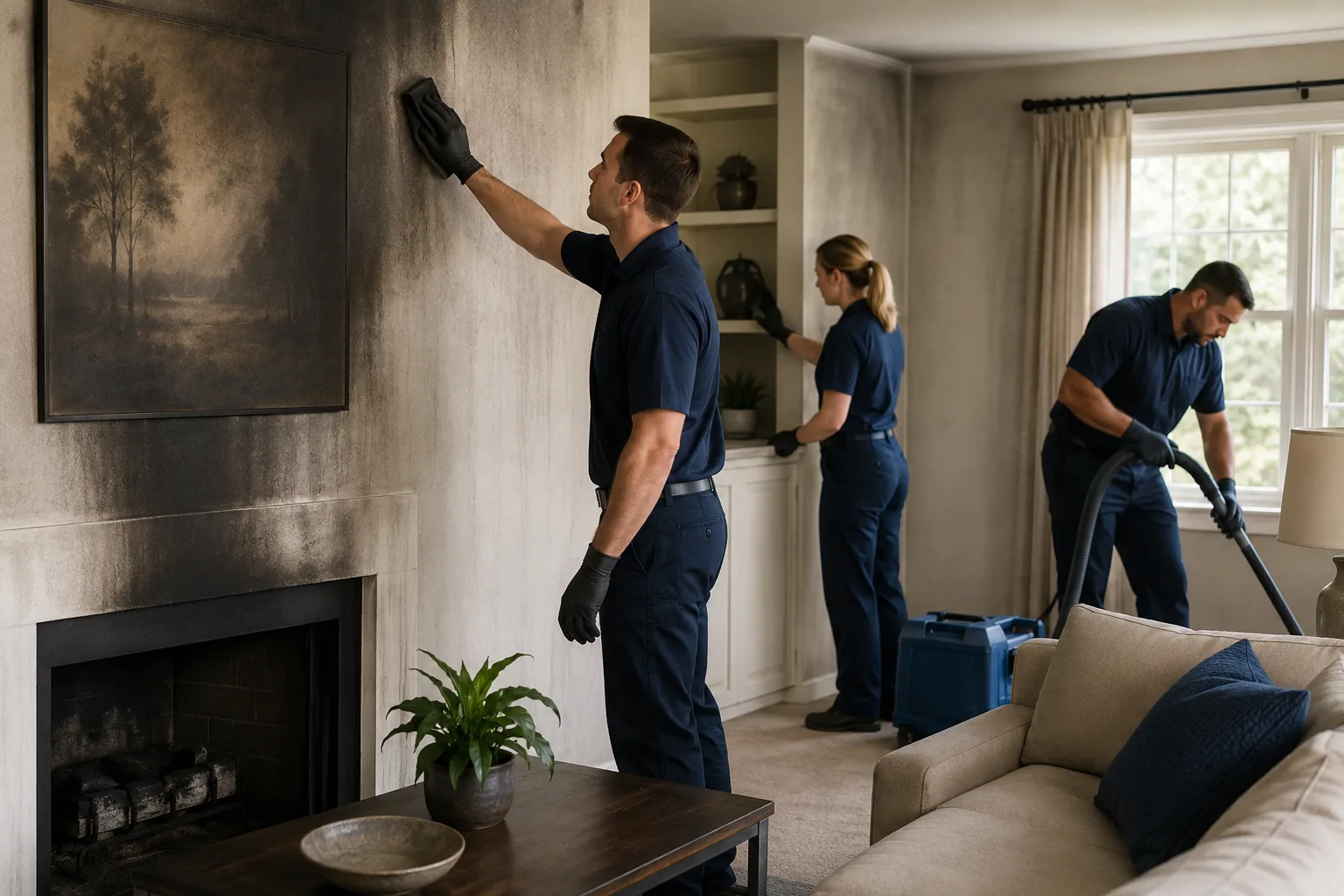
Why heat and humidity can reactivate smoke odor, where residue remains, and why deodorizing must follow source removal and surface-specific cleaning.
7 minute read · Guardian Restoration field guidance
01
Odor points to retained material
Smoke compounds can remain on surfaces, in porous materials, inside cavities, throughout contents, or along HVAC and pressure pathways. Fragrance does not remove the source.
02
Heat and humidity change what you notice
Warmer or more humid conditions can increase the release of compounds retained in materials, making an odor seem resolved and then return later.
03
Cleaning must match residue and surface
Fuel, combustion, temperature, suppression, and surface type influence the residue. Aggressive or incorrect cleaning can spread, set, or damage the material.
04
The whole footprint matters
Lasting recovery connects structural surfaces, contents, textiles, concealed spaces, air pathways, and reconstruction materials rather than treating one room in isolation.
Questions property owners ask
Make the next decision with context.
Will an ozone machine permanently remove smoke odor?
A treatment device is not a substitute for identifying and addressing retained source materials. Any treatment must be selected and operated with appropriate safety controls.
Why does the odor return when the furnace runs?
Air movement and temperature can redistribute or reveal residues retained in ducts, cavities, dust, contents, or nearby materials.
Can smoke-damaged clothing be restored?
Many textiles can be evaluated for specialized restoration based on fiber, dye, residue, heat, contamination, and condition.
Related Guardian capability
Fire and smoke restoration
See the field conditions, response sequence, credentials, and homeowner questions specific to this discipline.