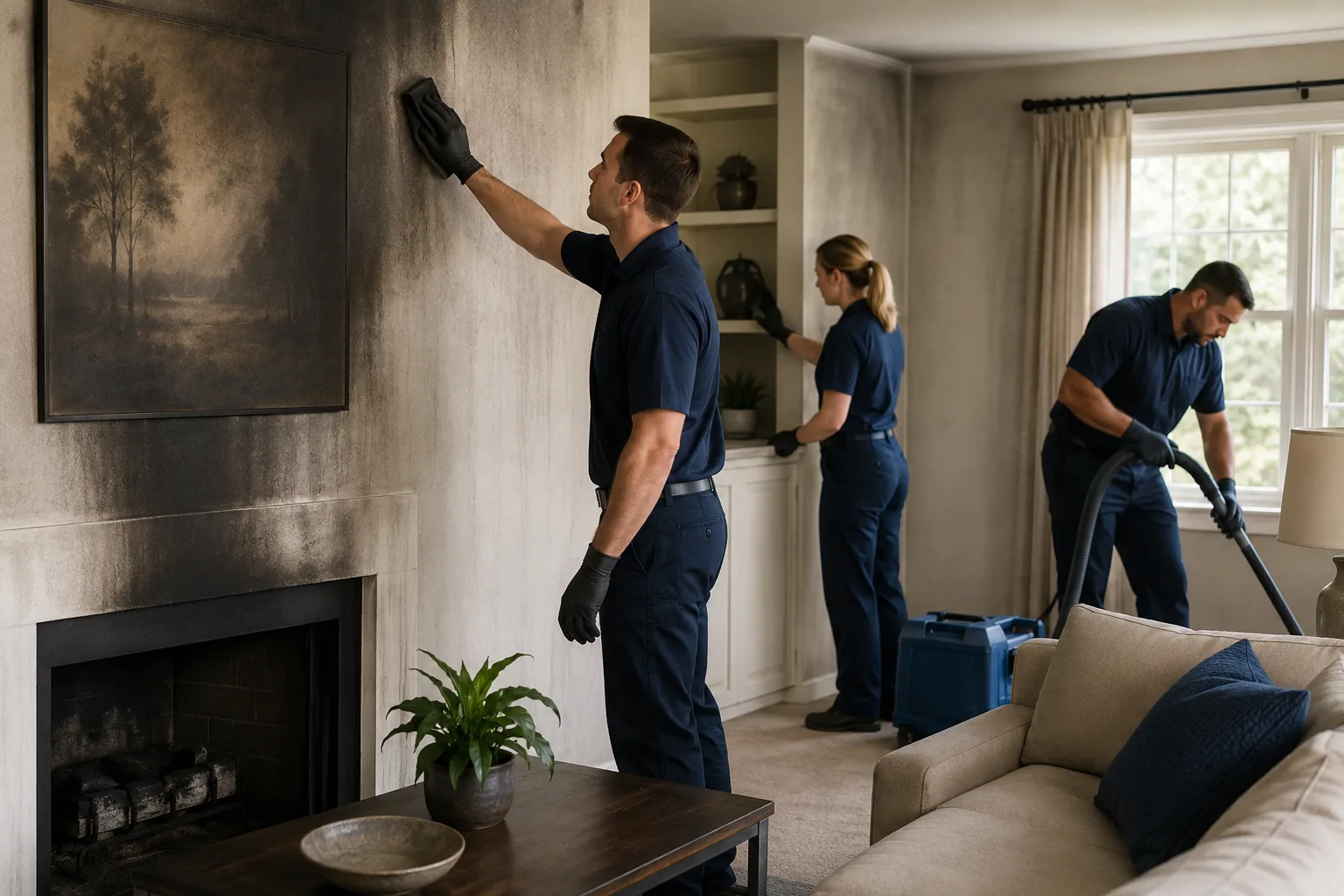
Why Smoke Damage Reaches Rooms the Fire Never Touched
How heat, pressure, airflow, HVAC pathways, residue type, and porous materials expand the true footprint of a fire loss.
7 minute read · Guardian Restoration field guidance
01
Smoke follows pressure and air movement
A fire changes pressure inside a structure. Smoke can move through doorways, chases, cavities, duct pathways, and tiny openings into rooms that show no burn damage.
02
Residues are not all the same
Fuel source, combustion temperature, oxygen, suppression, and the materials involved influence residue behavior. The correct cleaning method depends on both the soil and the surface.
03
Odor often points to retained source
Fragrance can mask odor temporarily. Lasting deodorization usually depends on removing or cleaning the affected source materials, treating concealed pathways, and matching the process to what actually burned.
04
Contents are part of the loss
Furniture, clothing, textiles, electronics, documents, and sentimental items require their own condition record and restoration decisions. Structural cleaning alone may not resolve the customer’s complete problem.
Questions property owners ask
Make the next decision with context.
Why does smoke odor return in warm weather?
Heat and humidity can increase the release of odor compounds retained in porous materials or concealed spaces.
Should I wipe soot from walls?
Improper wiping can smear or set residues. Avoid broad cleaning until the residue and surface have been evaluated.
Can smoke-damaged textiles be restored?
Many can be evaluated for specialized cleaning based on fiber, dye, residue, heat exposure, contamination, and condition.
Related Guardian capability
Fire and smoke restoration
See the field conditions, response sequence, credentials, and homeowner questions specific to this discipline.