 Customer PortalTell Us What Happened24/7 CALL · 866-655-4744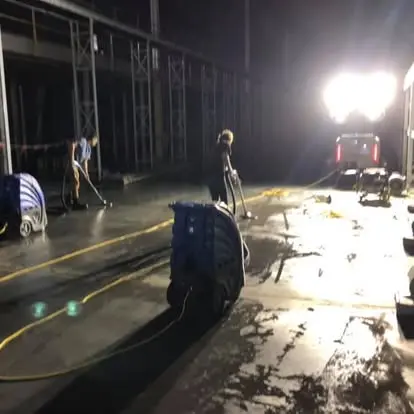
Large-Loss Water Response
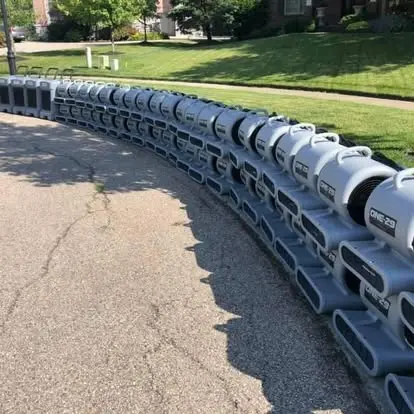
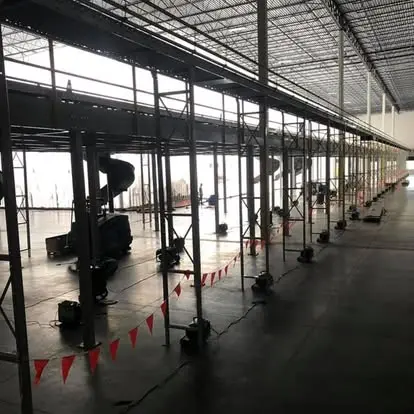
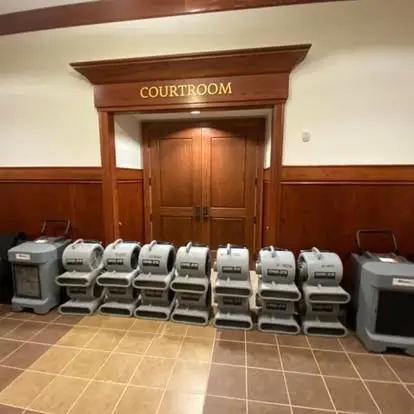
A high-capacity water response documented through extraction, equipment mobilization, controlled drying, and field monitoring.
Guardian field photography · Customer identity protectedWhat the property demanded.
Large water losses create simultaneous demands: water removal, safe access, power, material evaluation, moisture migration, equipment capacity, occupant or operational priorities, and a record that can support each next decision.
How the recovery was organized.
Guardian organized the response by phase—remove bulk water, define affected zones, deploy capacity to the actual conditions, and monitor the property rather than treating equipment placement as the finish line.
The work in one connected chain.
Public case studies protect customer identity and private claim information while showing the decisions and continuity behind Guardian’s work.
- 01Establish safety, access, source, and loss boundaries
- 02Remove bulk water and document migration
- 03Map affected assemblies and select drying controls
- 04Deploy extraction, air movement, and dehumidification capacity
- 05Monitor conditions, adjust the plan, and define completion
High-capacity extraction, equipment deployment, controlled drying, and monitoring organized by phase.
- Bulk-water removal
- Moisture mapping
- Capacity matched to conditions
- Measured drying progress
Go deeper into the disciplines.
Use the evidence to make the next decision.
01What qualifies as a large water loss?+
Scale is shaped by affected area, water volume, materials, levels, contamination, operations, access, power, contents, and the capacity required to stabilize the property.
02How does Guardian select drying equipment?+
Equipment type and quantity follow the actual materials, saturation, air pathways, environmental conditions, access, and response of the assembly.
03How do you know when structural drying is complete?+
Completion is based on documented material and environmental conditions—not appearance or a fixed number of days.
Bring this recovery discipline to your property.
Guardian responds across its regional service network. Explore local capabilities or share the conditions at your property.
Put Guardian’s depth against your damage.
Send photographs and the known property conditions. Guardian can organize the information before the first conversation and route the request to the right response path.
The proof is in the decisions between them.
Guardian’s project record is built to show not only what changed, but how the property moved from uncertainty to control.
Explore all Guardian case studiesWhat would help you feel more confident?
Choose the question that matters most to you. We will show you what to expect without asking you to know the technical language.
See the work before you choose
Inspect real conditions, decisions, and completed recovery stories.
View documented projects →Know what happens after the call
Walk through the response from first contact to completion.
Follow the recovery journey →See what Guardian is built to protect
Understand the standards behind every scope and handoff.
Read the Guardian Standard →What happened at your property?
If damage is active, call Guardian now. If you are still figuring things out, tell us what you see and we will help you understand your options.